
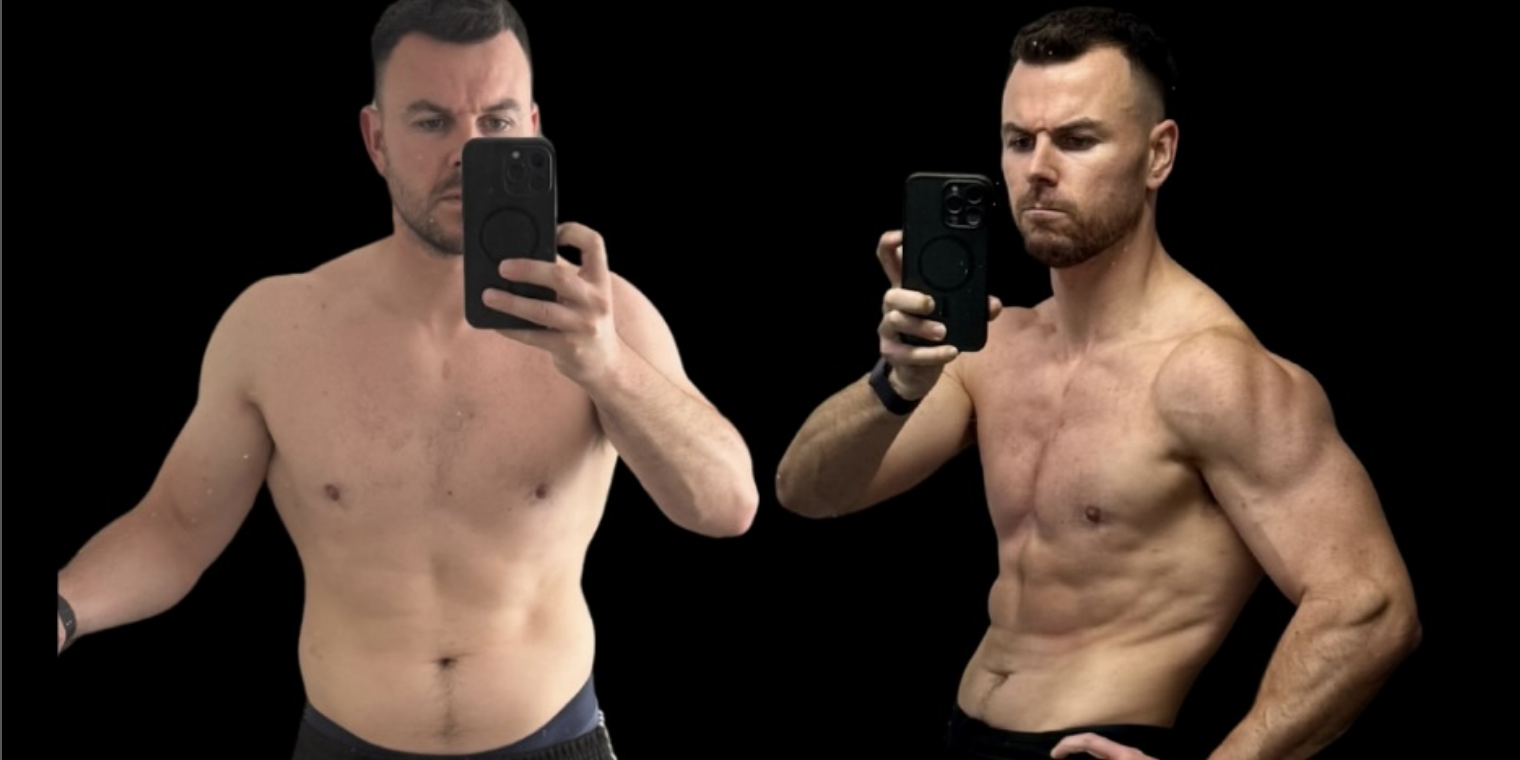
I spent three months testing weight loss injections in Leicester. Not because I needed to lose weight for health reasons — I didn’t. But because my clients considering Mounjaro and Wegovy were asking questions I couldn’t answer.
So I ran an experiment. I tracked everything. InBody scans, blood work before and after, training logs, sleep data, strength measurements, mood, energy levels — the lot.
This is what I learned.
Important disclaimer: I’m not a doctor. This isn’t medical advice. If you’re considering weight loss injections in Leicester, speak to a qualified medical professional. This is just my experience and my opinion as a personal trainer who’s worked with over 1,800 clients.
What Are Weight Loss Injections? (Mounjaro & Wegovy in Leicester)
The drugs most people are talking about are Mounjaro and Wegovy. The medical names are tirzepatide and semaglutide.
They’re GLP-1 agonists — which stands for glucagon-like peptide-1. That’s a hormone your body produces naturally. These drugs mimic that hormone but at much higher levels than your body would normally make.
Here’s what they do:
1. They suppress your appetite.
Significantly. Within 24 hours of my first injection, I tried to have a pint and couldn’t finish it. It tasted flat and horrible. Food cravings disappeared almost completely.
2. They slow down digestion.
Your stomach empties slower. You feel fuller for longer. The downside is constipation and digestive issues if you’re not careful with what you eat.
3. They increase insulin production (Mounjaro specifically).
This helps transport nutrients into your cells more effectively. It’s particularly beneficial for people with pre-diabetes or type 2 diabetes.
4. They disrupt the reward circuitry in your brain.
You stop enjoying things you used to enjoy as much. For me, that meant alcohol, tea, chocolate — anything I had cravings for before just didn’t appeal anymore.
My 3-Month Experiment: The Data
I started the experiment in mid-July. Here’s what happened:
Starting point:
- Weight: 89.5kg
- Body fat: 15%
- Fat mass: 13.4kg
- Muscle mass: 73.5kg
- Visceral fat: Level 5 (relatively low)
After 3 months:
- Weight: 77kg
- Body fat: 8.3%
- Fat mass: 6.8kg
- Muscle mass: 71.1kg
- Visceral fat: Level 2
Total changes:
- Weight lost: 12.5kg
- Fat lost: 6.6kg (over a stone of pure fat)
- Muscle lost: 2.4kg (mostly water, not actual muscle tissue)
- Visceral fat reduction: 60%
Cardiovascular fitness:
VO2 max improved from 51 → 54 (significant increase)
Strength:
Lost 10-15% on main lifts (bench press, squats, pull-ups). This recovered quickly once I stopped dieting.
Blood work changes:
- Total cholesterol: Down 28% (5.88 → 4.24)
- Non-HDL cholesterol: Down 29% (4.09 → 2.9)
- HDL cholesterol (good): Down 27% (1.79 → 1.3)
- Triglycerides: Down 44% (0.9 → 0.5)
One concerning marker:
Liver enzyme (ALT) doubled — this can happen with rapid fat loss, high training load, or as a side effect of the drugs themselves. It needs monitoring.
The Diet and Training Protocol
This is critical. I didn’t just inject myself and sit on the sofa eating crisps.
Calorie intake:
- Started at 2,200 calories per day for 4 weeks
- Dropped to 2,000 calories for several weeks
- Final 10 days: 1,800 calories (this was horrible — don’t recommend)
Protein intake:
Averaged 175 grams per day throughout
Training:
- Maintained 2-3 strength training sessions per week
- Added track and field work (sprints, jumps)
- Football once a week
The protocol shift:
After around 6 weeks on, I took 3-4 weeks off. Then I switched from one weekly injection to microdosing — three smaller injections spread across the week.
That change was massive. The appetite suppression from one weekly injection was too strong. I couldn’t eat enough. With microdosing, I could eat 2,600-2,700 calories per day, train harder, and still lose fat.
What I Found Good
1. Appetite suppression was significant.
If you’re someone who struggles with constant hunger and cravings, this removes that completely. I could have eaten more if I wanted to, but I just didn’t want to.
2. Alcohol cravings disappeared.
I usually have a couple of pints most weekends. Within 24 hours of the first injection, I couldn’t finish a pint. It just didn’t taste good anymore.
3. The calorie deficit was easy to maintain.
Without these drugs, dieting down to 8% body fat would have been miserable. The hunger would have been constant. With the drugs, that wasn’t an issue.
4. Fat loss was rapid and consistent.
6.6kg of pure fat in 12 weeks is aggressive. That wouldn’t have happened without the appetite suppression allowing me to stick to a consistent deficit.
What I Found Bad (Or At Least Difficult)
1. Sleep quality dropped.
Especially in the final weeks of the diet. This wasn’t the drugs — it was the calorie deficit. When you’re in a deep deficit, sleep suffers.
2. Energy and motivation tanked.
Again, this was the deficit, not the drugs. But it’s worth knowing — you don’t get a free pass. If you cut calories aggressively, you’ll feel it.
3. Training intensity suffered.
I struggled to push as hard in the gym. There was one football match where I had to ask to be subbed off because my body just couldn’t do what my mind wanted it to.
4. Strength dropped 10-15%.
This is normal when dieting. It came back quickly once I increased calories again.
5. The weekly injection dose was too strong.
I felt better when I switched to microdosing across the week. Less appetite suppression = more sustainable.
The Client Experience: Real-World Results
Around 18 months ago, a client in Leicester came to me and told me she’d been prescribed weight loss injections by a private clinic.
I wasn’t happy. She was carrying a bit of extra body fat, but nothing excessive. I felt she’d been mis-sold.
She went ahead anyway. Within the first few weeks, she lost half a stone. But when we did an InBody scan, around 50% of that weight loss was muscle — which I wasn’t happy about.
I restructured her training. More weight training, higher protein intake. She regained that muscle and went on to lose 15kg in total, putting her at the lower end of healthy BMI.
The lesson: If you use these drugs, you MUST prioritise strength training and protein intake. Otherwise, you’ll lose muscle alongside fat — and that’s not a good outcome.
Who Should Consider Weight Loss Injections in Leicester
I’m not a doctor, so I can’t prescribe or recommend. But here’s my opinion based on what I’ve seen:
You might benefit from these drugs if:
- You’re genuinely overweight or obese (not just carrying a bit of extra weight)
- You’ve tried multiple diets and failed consistently
- Your cravings and appetite are out of control
- You’re willing to do the work alongside them (training + nutrition)
- You’re under medical supervision
These drugs don’t replace the fundamentals. They just make the fundamentals easier to stick to.
If you’re someone who’s never been able to follow a diet because the hunger is too intense, these drugs remove that barrier. But you still need to train, you still need to eat enough protein, you still need to build the habits.
Who Shouldn’t Use Weight Loss Injections
Don’t use these drugs if:
- You’re only carrying a small amount of extra weight (under a stone)
- You’ve never genuinely committed to a proper diet and training programme
- You’re not willing to strength train consistently
- You’re looking for a quick fix without changing your lifestyle
- You have a history of eating disorders
Here’s the reality: If you’re not overweight enough to justify them, you’re using a sledgehammer to crack a nut. Just eat better and train consistently.
And if you use them without training and high protein intake, you’ll lose a significant amount of muscle. That’s a disaster for your metabolism and your long-term health.
How to Use Weight Loss Injections Properly (If You Do Use Them)
If you’re going to use weight loss injections, here’s what you need to do:
1. Work with a medical professional.
Get proper medical supervision and monitoring.
2. Prioritise strength training.
Two to three sessions per week minimum. Focus on compound lifts — squats, deadlifts, presses, rows. This protects your muscle mass.
3. Eat enough protein.
1.5-2 grams per kilogramme of body weight. Every single day. This is non-negotiable.
4. Monitor your digestion.
These drugs slow digestion. Don’t compound that by eating loads of dietary fat in one go. Spread your meals out. Stay hydrated.
5. Get regular blood work.
Monitor liver enzymes, cholesterol, blood glucose, kidney function. These drugs are powerful — you need to track their effects.
6. Don’t stay on them forever.
Use them as a tool to get the weight off, but build the habits that will keep it off once you stop.
My Honest Take
If you’re someone who’s been overweight for most of your adult life, you’ve tried everything, and the cravings and appetite are genuinely out of control — then under medical supervision, these drugs could be life-changing.
But they’re not a shortcut. They don’t replace the fundamentals. They just make the fundamentals easier to stick to.
And if you use them without doing the work — without training, without protein, without building habits — you’ll regain the weight as soon as you stop.
What About Long-Term Effects?
We don’t know yet. These drugs are relatively new in widespread use.
There are some concerning reports:
- Age-related macular degeneration (vision issues) appearing earlier in people using these drugs
- Long-term effects on liver enzymes and metabolism are still unclear
- What happens when people stop using them long-term isn’t well studied yet
That’s why medical supervision is critical. You need someone monitoring you properly.
According to NHS guidance on semaglutide (Wegovy), common side effects include nausea, diarrhoea, constipation, and stomach pain. More serious side effects require immediate medical attention.
The Role of Personal Training With Weight Loss Injections in Leicester
If you’re using weight loss injections in Leicester, personal training becomes even more important, not less.
At Transformation Fit, we’ve worked with clients using these drugs. Here’s what we do:
1. Prioritise strength training.
We design programmes specifically to preserve muscle mass during aggressive fat loss.
2. Monitor body composition.
We use InBody scans to track fat loss vs muscle loss. If muscle loss is too high, we adjust training and nutrition immediately.
3. Increase protein targets.
We push protein intake higher than normal to protect muscle tissue.
4. Educate on long-term habits.
The drugs are temporary. The habits need to be permanent. We focus on building sustainable routines.
If you’re using weight loss injections and you’re not strength training, you’re doing it wrong.
Final Thoughts
These drugs will play a significant role in the obesity crisis. For some people, they’ll be genuinely life-changing.
But they’re not magic. They’re a tool. And like any tool, they work best when used properly.
If you’re considering weight loss injections in Leicester:
- Speak to a doctor
- Get proper medical supervision
- Commit to strength training
- Hit your protein target every day
- Build the habits that will keep the weight off long-term
And if you’re in Leicester and you need help with the training and nutrition side of things, we can help.
Book Your Free Consultation
If you’re considering weight loss injections in Leicester, already using them, or struggling with your weight and need proper training support — book a free consultation with us.
We’ll walk you through what’s possible, what to expect, and how to do it properly.
Or call: 0116 344 0266
📍 Unit 6 Heanor Street, Leicester, LE1 4DB
⭐ 4.9★ from 211 Google reviews
Want Support With Your Weight Loss?
Whether you’re using weight loss injections or not, the fundamentals are the same:
- Strength training to preserve muscle
- High protein intake
- Sustainable calorie deficit
- Proper coaching and accountability
We offer 1-to-1 personal training and small group sessions in Leicester. Both formats work. Both get results.
Learn more about our 90-day programme →
About the Author: Josh Rylatt is the founder of Transformation Fit in Leicester. He’s a personal trainer with 13 years of experience working with over 1,800 clients. He ran a 3-month self-experiment using weight loss injections to better understand how they work and how to coach clients using them.