How to Get Your Gym Motivation Back: A Leicester Coach's 3-Step Formula
If you’ve been meaning to get your gym motivation back for weeks now, maybe months, I want to take something off your shoulders before we go any further. It probably isn’t a willpower problem. I’ve been coaching people over 40 at our studio on Heanor Street in Leicester since 2015, and the people who come to us having stopped and started a dozen times are not lazy. They’ve just been using the wrong tool for the job.
Most people think motivation is the thing you need before you can start. You wait for it to show up, and when it doesn’t, you tell yourself you’ll get back on it once things calm down. In January, probably.
Here’s the hard truth. Things don’t calm down, and motivation rarely punches you in the face and makes you get going. The reality is, it works the other way round. Action comes first. The motivation follows.
So this isn’t a pep talk. It’s the three-step formula I walk people through on the Transformation Fit podcast and in the studio when they’ve lost their way with training. Simple, practical, and built for people with busy lives, dodgy knees and a history of giving up.
Why you lost your gym motivation in the first place
I’ve lived this one myself. For two years I said I was going to start a podcast and couldn’t. I needed a studio first. Someone to edit it. Two cameras. All very intelligent reasons, and all of them excuses. I’d let perfect be the enemy of good.
The people who lose their gym motivation have usually done the same thing. They’ve decided that getting back into it means an hour, five days a week, a strict meal plan, calories counted, protein hit, all from day one. It’s too much, too soon. Within a fortnight it falls apart. Not because there’s anything wrong with them. Because they overcommitted.
The second reason is quieter. When you train on your own, nobody is expecting you. Nobody notices when you stop. I’ve seen it hundreds of times across Leicester: people who joined a big gym, went a few times, drifted, and quietly decided the problem was them. It wasn’t. It was the setup.
Step 1: Generate momentum with the smallest action you can repeat
Think about a merry-go-round in the park. When you first push it, it’s slow and heavy. But once it’s turning, you can walk, then jog, then run alongside it. Eventually all it takes is a tap now and then to keep it spinning.
Your training is the same. Getting going is the hardest part, and most people never get past it because they try to push the whole thing at full speed on day one.
The way through is what I call a minimal viable action. Something so small it avoids that heavy sense of resistance. If you’re struggling to get back to the gym, don’t tell yourself you’re training four times a week from Monday. Instead:
- Walk for 10 minutes a day, every day, for a week
- Do one coached session this week. Just one. Put it in the diary like a dentist appointment
Momentum comes from lowering the bar to create early wins. You don’t need to do everything. You need to do something you can repeat, then build from there. Something always beats all or nothing.
Step 2: Plan for the setbacks you already know are coming
Most people have a negative relationship with discipline. They see it as being harsh on themselves. I’d flip that. Discipline isn’t being hard on your current self. It’s being kind to your future self.
And most people don’t relapse because they’re lazy. They relapse because they don’t prepare for predictable setbacks. The weekend. The works do. The week away. The evening on the sofa with the biscuit tin. These things have derailed every attempt before, so pretending they won’t happen this time is the one strategy guaranteed to fail.
Instead, make a plan while your head is clear:
- Know Saturday will be a big one? Go a little lighter on Friday and Sunday so the week averages out, and enjoy Saturday without the guilt
- Got a busy week coming up? Don’t dwell on the three sessions you can’t do. Find the one or two you can, and book them now
- Crave something sweet every evening? Fine, have it. But have a pint of water and some protein first. You’ll naturally eat less of it
Setbacks aren’t problems to avoid. They’re challenges to plan around. People try to avoid problems, but people love overcoming challenges. It’s a small shift in how you talk to yourself, and it changes how long you last.
Step 3: Track behaviours, not just outcomes
What you track, you can improve. What you ignore, you repeat. People drift into failure when they stop paying attention to what they’re actually doing, then act surprised when the results stop too.
I’m not asking you to obsess over every detail, just to bring regular awareness to your habits. And there’s an important distinction. Most people only track the outcome: what the scales say. The scales are the least interesting number in this process. They go up and down with water, salt, sleep and stress, and they’ll lie to you on any given morning.
Track the behaviours instead. Did you do your sessions this week? Did you hit your steps? Did you sleep properly? Did you eat some protein at every meal? Those are the things you control, and if the behaviours are consistent, the outcomes take care of themselves.
Some easy ways to start:
- Write down one health and fitness win at the end of every day. One line
- Set a daily step target, especially on the days you don’t train
- Note how you felt before and after a session. Nobody has ever written “worse” in the after column
I’ve sat in goal reviews with members who walked in convinced nothing was working and walked out fired up, purely because we looked at what they’d actually done rather than the story they’d been telling themselves. Measuring swaps negative self-talk for facts.
Getting back to the gym in Leicester: what Ros, Amita and Amar did
The people who’ve done it make the point better than I can.
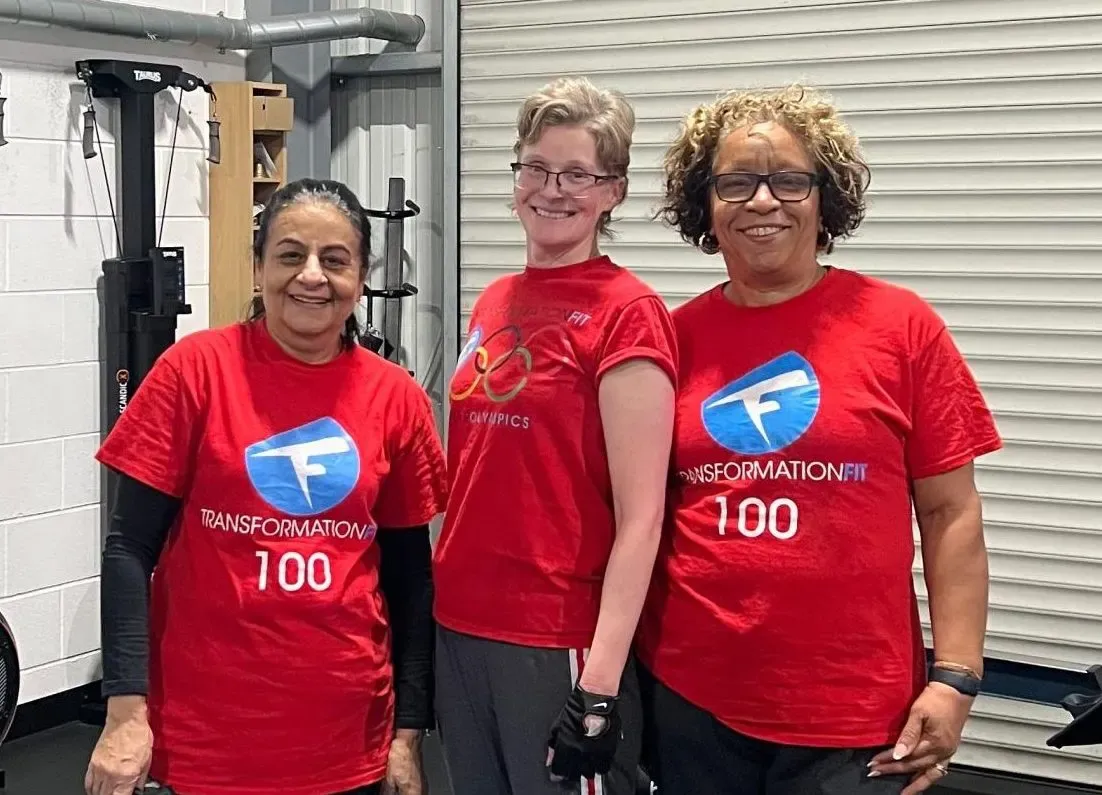
Ros had a pattern. He’d join a gym, go hard for a few weeks, then work would get busy and he’d quietly stop. A few months later he’d start again. Same loop. The problem was never effort. It was that nothing made it stick. When he came to us, two things changed: it was actually enjoyable, with people in it alongside him, and it fitted his life. An hour, two or three days a week. Twelve months of consistent, coached training later, Ros is benching 110kg. Not because he became a different person. Because the training was built to survive a busy life.
Amita had basically given up. She’d tried the gym on her own, never knew what she was supposed to be doing, so she stopped, and stayed away for eight years. She found us almost on a whim, and four and a half years later she’s still here. Ask her why and she doesn’t talk about equipment. She says it feels like family, and that the mental side matters as much as the physical.
Amar simply decided it was time. No crash diet, no hours of cardio, no trying to be perfect for a fortnight and burning out. Just showing up and following the plan. Three months on, he’d lost 7kg and dropped his body fat by 4%. More importantly, he’d built the habits that keep going after the initial motivation fades.
Three different people, the same formula. Start small, plan for the setbacks, keep an honest eye on what you’re doing. To see how that works day to day, have a read about small group personal training in Leicester or 1-to-1 personal training at the studio.
Is it harder to get your gym motivation back after 40?
People ask me this a lot, as if they’ve left it too late. The reality is, it isn’t harder to get going after 40. It’s just that the cost of not going is higher. After about 50 you lose a little strength and muscle every year you don’t train. The NHS guidelines recommend muscle-strengthening activity on at least two days a week for exactly that reason, and it’s one of the few things about getting older you genuinely get a say in. I’ve written more about that in our guide to strength training over 50 in Leicester.
What does change after 40 is what works. The no-days-off, punish-yourself-into-shape approach doesn’t survive a job, a family and a body with a bit of history. What survives is a plan built around you, a coach who adjusts it when life gets in the way, and a room full of people who’ll notice if you don’t turn up. That’s not a motivation strategy. It’s a system. The people who stay consistent didn’t find more willpower than you. They got a setup that didn’t fall apart the moment things got busy.
Questions people ask about getting gym motivation back
How do I get motivated to go back to the gym after a long break?
Don’t wait to feel motivated. Pick one small, repeatable action, a 10-minute walk or a single coached session, and do it this week. Motivation follows action. And nobody at a good studio will ask where you’ve been.
Should I get a bit fitter on my own before I come back?
Everyone says this, and I’ve never once seen it work. That’s the whole point of being coached. You come back at whatever level you’re at and the coach works round it. The knee, the shoulder, the year off.
How long before I feel the difference?
Most people notice the same things first, usually within a few weeks: sleeping better, a bit more energy, stairs feeling easier. The scales come later. Judge your first month on behaviours, not outcomes.
What if I’m nervous about training around other people?
Lots of people start 1-to-1, build their confidence, and move into a small group when they’re ready. Others stay 1-to-1 for good. Both work. Our small groups are never more than 10 people, everyone is coached individually, and nobody is watching you. They’re all busy being slightly out of breath.
Book your free consultation
If you’ve lost your gym motivation and you’re tired of starting over, the easiest first step is a conversation: a free consultation call with me. We talk about where you are, what’s stopped you before, what you actually want, and whether 1-to-1 or small group training makes sense for you. No pressure, no hard sell, just an honest chat.
Book your free consultation call with Josh → or call the studio on 0116 344 0266.
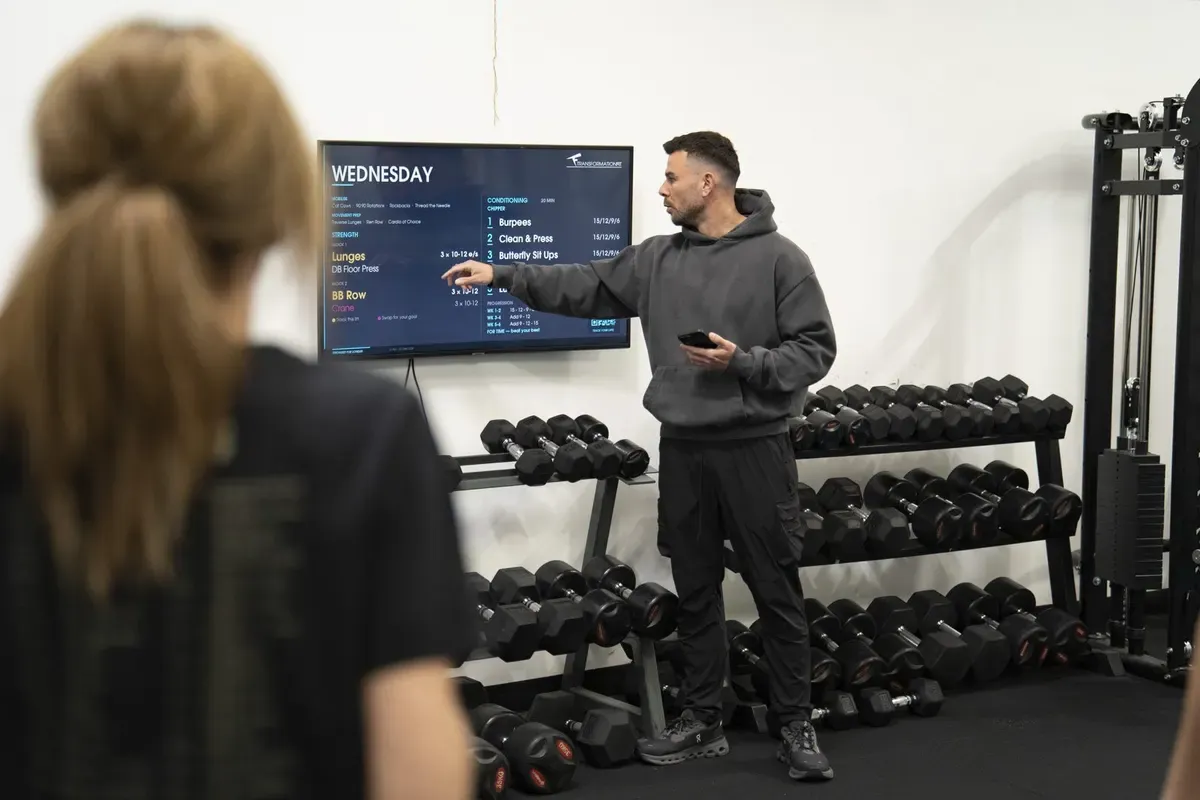
About the author: Josh Rylatt is the founder of Transformation Fit, a coached personal training studio in Leicester for people over 40, at Unit 6 Heanor Street and open since 2015. The team has coached more than 1,800 people in that time. Josh hosts the Transformation Fit podcast and personally runs every free consultation call.

Josh Rylatt founded Transformation Fit in 2015 and has been coaching people in Leicester ever since, specialising in over-40s getting back into training.