If you’re over 50 and you’ve been told it’s too late to start strength training, or that you should stick to gentle walks and stretching — ignore that advice.
It’s not just wrong. It’s harmful.
The reality is this: from around age 40 onwards, the average person loses roughly 1% of their muscle mass each year. By the time you hit 50, that loss accelerates. And for women going through menopause, the decline is even sharper — around 30% of muscle mass can be lost within seven years of menopause starting.
That muscle loss isn’t just cosmetic. It’s the difference between being able to carry your shopping, play with your grandkids, and tie your shoelaces without your back hurting — and not being able to do those things.
The good news? You can reverse it. And the fastest way to do that is through strength training.
The Myths About Exercise After 50 (And Why They’re Dangerous)
Myth 1: “It’s too late for me to start exercising.”
No, it isn’t. I’ve worked with clients who started in their late 70s and early 80s. Some of them couldn’t walk when they first came to me. They can now.
Myth 2: “I shouldn’t lift weights because my joints are weak.”
Your joints are weak because you’re not lifting weights. Strength training doesn’t damage healthy joints — it strengthens the muscles, tendons, and ligaments that support them.
Myth 3: “I just need to do more walking and stretching.”
Walking is excellent for general health. Stretching has its place. But neither will rebuild the muscle mass you’re losing every year. Only resistance training does that.
What Happens If You Don’t Strength Train After 50
Let me be blunt about this.
If you continue losing muscle mass at the rate most people do after 50, here’s what’s coming:
- Reduced metabolic rate. Less muscle = slower metabolism = harder to manage your weight.
- Increased injury risk. Weak muscles can’t protect your joints. Falls become more dangerous.
- Loss of independence. Eventually, you struggle with stairs, getting out of chairs, carrying bags.
- Increased mortality risk. Studies show that low muscle mass and low grip strength are directly linked to higher risk of dying from all causes.
That last one sounds dramatic, but it’s true. Within 30 days of a hip fracture in the UK, roughly 10% of people die. Within a year, it’s 30%.
Why? Because the hip fracture is a symptom of weak bones and weak muscles. Once you’re laid up recovering, you lose even more muscle. It’s a downward spiral.
Strength training reverses that spiral.
What Strength Training Actually Does for People Over 50
Here’s what happens when you start lifting weights properly:
1. You rebuild muscle mass.
Progressive resistance training signals your body to build new muscle tissue. Even in your 70s and 80s. Even if you’ve never trained before.
2. Your bones get stronger.
Weight-bearing exercise increases bone density. This is critical for preventing fractures and osteoporosis — especially for women post-menopause.
3. Your metabolic rate increases.
More muscle = higher resting metabolic rate = easier to manage your weight without extreme dieting.
4. Chronic pain reduces.
Counter-intuitive but true: the right strength work reduces chronic pain. Stronger muscles support your joints. Better mobility means less stiffness. Most of my clients with bad backs, bad knees, or bad shoulders feel significantly better after 90 days.
5. Your risk of dying from all causes drops.
There are studies showing that grip strength alone — a simple marker of overall strength — predicts longevity. For every 5kg reduction in hand grip strength, your risk of dying increases by 16%.
Maria’s Story: 77 Years Old, Diabetic, Couldn’t Walk
Maria came to me when she was 77. She’d had a car accident years earlier that damaged her body. She had crippling sciatica, type 2 diabetes, and high blood pressure.
She hadn’t walked or driven a car in over two years.
When she first arrived, she couldn’t even lower herself from standing into a chair without desperately gripping onto something for support.
You might think someone in that condition should avoid strength training. The opposite is true. The only thing we did with Maria was strength training.
Within nine months of training with me for one hour per week:
- She’s walking again
- She’s driving again
- She picks up her granddaughter from school
- She visits her friends whenever she wants
- Her blood pressure has dropped
- Her blood glucose readings have improved
- She’s lost weight
- Her sciatica still flares up occasionally, but nowhere near as bad — and she stays mobile through it
Does she still have diabetes? Yes. Does she still get sciatica? Yes. But she’s reclaimed her independence.
And the only method we used was lifting weights.
The Types of Exercise You Should Be Doing After 50
If you’re over 50 and you want to stay strong, stay healthy, and keep doing the things you enjoy in life, here’s what actually works:
1. Strength Training (Priority #1)
Pick two to three compound exercises that work multiple joints at once. Examples:
- Squats (or a regression like sit-to-stands)
- Deadlifts (or a regression like picking something up off the floor)
- Presses (pushing weight overhead or away from your chest)
- Rows (pulling weight towards you)
Perform these exercises two to three days per week. Every session, try to do one more rep, or add a little more weight. That’s called progressive overload. It’s the signal your body needs to adapt and get stronger.
Important: You don’t need to start with a barbell on your back. Many of my clients start with bodyweight exercises or very light weights. The principle is the same — progressive resistance over time.
2. Cardiovascular Exercise
There’s a study that showed working on your cardiovascular fitness four days per week at the age of 50 reversed the heart’s age by around 20 years. Two years of structured training — running, cycling, rowing, cross-trainer at high enough intensity — reduced the biological age of participants’ hearts by two decades.
You don’t need to run marathons. You just need to get your heart rate up regularly.
3. Flexibility and Mobility (But Not Instead Of Strength)
Stretching reduces injury risk by around 4-5%. Strength training reduces your injury risk by around 69%.
Flexibility and mobility work is useful — it’s essentially the beginning phase of a strength training programme. But your body stops adapting if you never progress beyond it.
That’s where so many people go wrong with gym memberships. They pick the same weights, the same reps, the same routine every week. No progression = no adaptation = no results.
Nutrition: What You Need to Eat After 50
Training is half the equation. Nutrition is the other half.
If you’re over 50 and you want to build muscle and improve your health, here’s what you need:
Protein: 1.5–2 grams per kilogramme of body weight.
This is non-negotiable. Protein helps your muscles recover and grow. The older you are, the more protein you need to achieve the same muscle-building effect as a younger person.
Carbohydrates: 0–2 grams per kilogramme, depending on how active you are.
If you’re training regularly, you need carbs to fuel those sessions and recover properly.
Dietary fat: Around 1 gram per kilogramme as a starting point.
Healthy fats support hormone production, joint health, and overall wellbeing.
Supplements that help:
- Multivitamin (covers nutritional gaps)
- Omega-3 fish oils (reduces inflammation, supports heart health)
- Creatine monohydrate (improves strength and muscle mass)
- Vitamin D (especially in the UK — most people are deficient)
- Magnesium (supports sleep, recovery, bone health)
These aren’t magic pills. But combined with proper training, they make a noticeable difference.
How to Get Started (Even If You’re Nervous)
Most people who come to me are nervous. They haven’t trained in years. They don’t know what they’re doing. They’re worried they’ll hurt themselves.
Here’s my advice:
Step 1: Hire a coach.
Don’t try to figure this out on your own. A good personal trainer will assess where you’re at, design a programme around your limitations, and progress you safely.
Think of it as an investment, not an expense. You’re not just paying for sessions — you’re learning tools, techniques, and strategies for life.
Step 2: Start where you are.
You don’t need to be fit to start training. You get fit by training. I’ve had clients start with me in their late 70s who couldn’t walk. We still did strength training. It was just regressed to their level.
Step 3: Focus on consistency over intensity.
Two sessions per week, done consistently for three months, will give you better results than five sessions per week for three weeks followed by burnout.
What You Can Expect in 90 Days
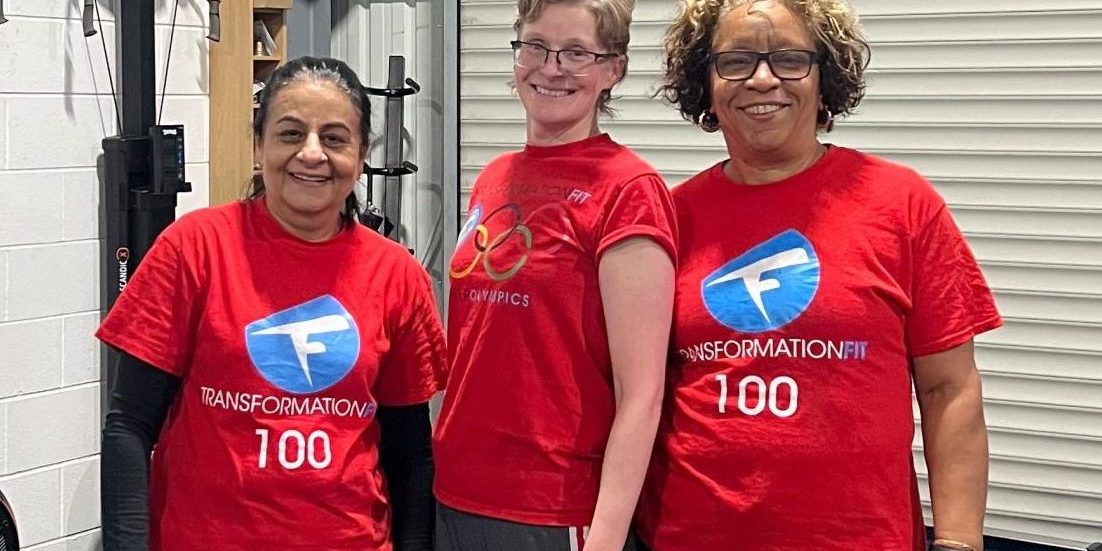
If you start personal training in Leicester at Transformation Fit and you’re over 50, here’s what typically happens in the first 90 days:
Weeks 1-4:
- You start to feel stronger in everyday tasks (stairs, carrying bags, getting out of chairs)
- Energy levels improve
- Sleep quality often improves
- Aches and pains may reduce
Weeks 5-8:
- Noticeable strength gains in the gym
- Visible changes in body composition (less fat, more muscle)
- Confidence increases
- Movement feels easier
Weeks 9-12:
- Significant improvement in strength markers
- Health markers improve (blood pressure, blood sugar, cholesterol often drop)
- You’re doing exercises you couldn’t do when you started
- The habit is established — training becomes part of your routine
It’s not magic. It’s just consistent, progressive, coached training over time.
1-to-1 or Small Group: Which Is Right for You?
At Transformation Fit, we offer two formats:
1-to-1 Personal Training — private sessions, your coach’s full attention, ideal if you’re nervous, have injuries, or want complete privacy.
Small Group Personal Training — you train alongside others (max 10 people, average 7), but you’re still coached individually. Not a class where everyone does the same thing. Good if you like the social element and accountability of training with others.
Both work. Both deliver results. The difference is just the format.
Not sure which suits you? Book a free consultation and we’ll walk you through it.
Final Thoughts: Don’t Wait Until It’s Too Late
I know it feels daunting. I know you’re probably thinking “I’m too old” or “I’m too far gone” or “I don’t know where to start.”
But here’s the reality: you’re not too old. You’re not too far gone. And you don’t need to know where to start — that’s what we’re here for.
What you do need to do is start now. Not next week. Not after Christmas. Not when you “feel ready.”
Because the longer you wait, the harder it gets. Muscle loss accelerates. Bone density decreases. The gap between where you are and where you want to be widens.
But if you start today — even with just one session per week — you begin reversing that process immediately.
Your future self will thank you.
Book Your Free Consultation
If you’re over 50, based in or near Leicester, and you want to rebuild your strength, reduce your aches, and get back to doing the things you love — we can help.
No judgement. No pressure. Just a conversation about where you’re at and what’s possible.
Or call us directly: 0116 344 0266
About the Author: Josh Rylatt is the founder of Transformation Fit, a personal training studio in Leicester specialising in coaching people over 40. Over the past 13 years, he’s worked with over 1,800 clients — from professional athletes to grandmothers in their 80s who’ve had multiple spinal surgeries.